


HVLS Mobile Fans
What is HVLS Mobile Fans
HVLS stands for “High-Volume, Low Speed,” and is used to describe the fact that these large fans move a high volume of air while spinning at a low rotational speed. More specifically, an HVLS mobile fans is defined as any mechanical fan measuring more than seven feet in diameter.
-
![OPTFANS BIG Mobile Floor Fans Portable Fans For Gymnasium]()
-
![OPTFANS Big 2M Big Standing Porable Industrial Fans for Gym]()
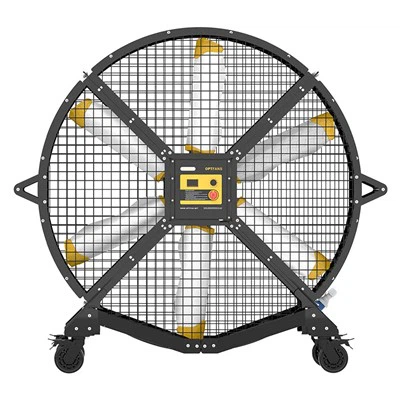
OPTFANS Big 2M Big Standing Porable Industrial Fans for Gym
Texture of material: Magnesium aluminum alloy. Degree of protection: IP55.
-
![OPTFANS 2M Large Standing Mobile Fans]()
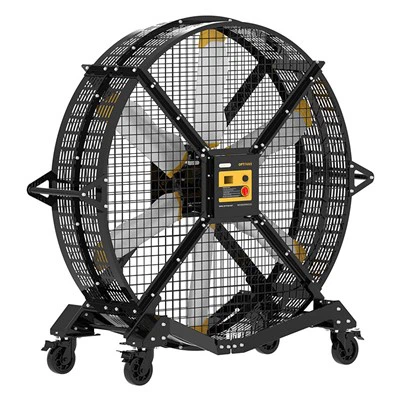
OPTFANS 2M Large Standing Mobile Fans
Main motor: PMSM Motor. Fan height: 2M. Warranty: 2 years. Noise level: <43dBA.
-
![OPTFANS High Quality 2M HVLS Big Mobile Fans]()
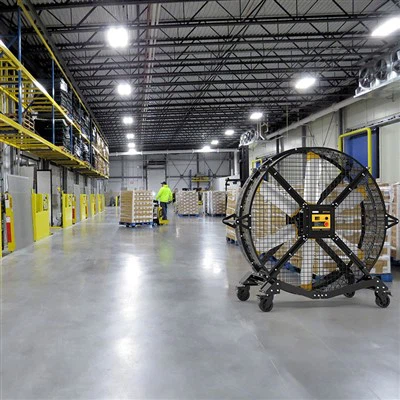
OPTFANS High Quality 2M HVLS Big Mobile Fans
Texture of material: Magnesium aluminum alloy. Degree of protection: IP55.
-
![Big 2M Portable Mobile Standing Fans]()
Big 2M Portable Mobile Standing Fans
Main motor: PMSM Motor. Fan height: 2M. Warranty: 2 years. Noise level: <43dBA.
-
![OPTFANS 2M Outdoor Mobile Stand Fans for Industrial Use]()
OPTFANS 2M Outdoor Mobile Stand Fans for Industrial Use
Texture of material: Magnesium aluminum alloy. Degree of protection: IP55.
-
![HVLS Big Movable Fans]()
Main motor: PMSM Motor. Fan height: 2M. Warranty: 2 years. Noise level: <43dBA.
-
![OPTFANS 1.6M Big Hvls Mobile Standing Porable Fan Outdoor]()
OPTFANS 1.6M Big Hvls Mobile Standing Porable Fan Outdoor
Texture of material: Magnesium aluminum alloy. Degree of protection: IP55.
-
![HVLS Mobile Ventilator Fan]()
-
![1.6M Giant Mobile Floor Fan Wheel]()
1.6M Giant Mobile Floor Fan Wheel
Texture of material: Magnesium aluminum alloy. Degree of protection: IP55.
-
![HVLS Sport Standing Cooling Big Movable Fan]()
HVLS Sport Standing Cooling Big Movable Fan
Main motor: PMSM Motor. Fan height:1.6M. Warranty: 2 years. Noise level:
-
![1.6M Big Mobile Gym Movable Fans - KT series]()
1.6M Big Mobile Gym Movable Fans - KT series
Texture of material: Magnesium aluminum alloy. Degree of protection: IP55.






Benefits of HVLS Mobile Fans
Portability and comfort
One of the main benefits of HVLS mobile fans is that they can be conveniently used in a wide range of locations. They can be used at home as a less expensive alternative to air conditioners, cutting energy costs. They are also invaluable at large gatherings to help keep crowds cool, making visits to large events in the outdoor heat more comfortable and enjoyable. Portable misting fans can also keep people cool during sporting events, camping outings, or barbecues.
Safety
In addition to keeping people comfortable, HVLS mobile fans keep people safe during the hot summer months. When temperatures soar, people are more at risk of falling ill or even dying from dehydration and heat stroke. However, HVLS mobile fans use the sweat that forms beads on the skin to provide cooling. When a breeze goes over sweat beads, it cools the sweat and helps cool down the body.
Beneficial for sensitive groups
Children especially benefit from HVLS mobile fans when they're playing outside. Children sometimes forget to drink water when they're busy having fun, which can cause dehydration, but misting fans can help them remain hydrated and cool. These fans are also immensely helpful in keeping animals cool, as animals do not always sweat the same way humans do. For instance, a dog burns heat off its body through its paws or panting. A misting fan can keep family pets or farm animals such as horses comfortable and cool so they don't become ill or die from the heat.
Can be used in industrial settings
In certain applications, standard industrial misting systems are not the correct option for the job. In this case, HVLS mobile fans can be used both indoors or out. Portable misting fans can be mounted on a wall, trailer, or a cart, depending on where they need to be transported and used. Portable misting fans are durable, rugged, and built for industrial use. These systems can cool large spaces or smaller areas, and can also supply the humidity needed for any type of application.
Why Choose us
Experienced team
Our team comprises professional and experienced individuals who possess the necessary skills to handle and deliver your project with a top-rated result.
We always deliver on time
We genuinely understand the value of time in business and hence adhere to time and deliver all projects on time to our customers.
Customer satisfaction
We place customer satisfaction at the core of our operations. We aim to deliver services that exceed our customer's expectations and earn their trust.
Professionalism
Our company is committed to providing top-notch services to our clients. We have a team of highly skilled professionals who are trained to deliver quality services.
Experience
Our company has years of experience in the industry, which has enabled us to build a solid reputation for ourselves. We have worked with various clients and delivered successful outcomes.
Quality
Our top priority is to provide high-quality work that meets and surpasses your expectations.
HVLS Mobile Fans should NOT be used in the following situations
In high-risk areas including operating rooms, critical care units, transplant units, dialysis units.
In areas where immunocompromised patients receive care, for example, oncology units.
In rooms where a patient is on airborne precautions.
In rooms where a patient is on droplet or contact precautions, for example, Clostridium difficile, MRSA, norovirus.
In rooms with directed airflow e.g. positive or negative pressure rooms.
In areas where sterile supplies are stored or where medical device reprocessing occurs, for example, hospital sterile services department, endoscopy units.
Understanding Compressors, HVLS Mobile Fans & Blowers
Compressor A compressor is a machine which reduces the volume of gas or liquid by creating a high pressure. We can also say that a compressor simply compresses a substance which is usually gas.
HVLS mobile fans A HVLS mobile fans is a machine used to move fluid or air. It is operated through a motor via electricity which rotates the blades that are attached to a shaft.
Blowers Blower is a machine to move air at a moderate pressure. Or simply, blowers are used for blowing air/gas.
Types of HVLS Mobile Fans

01.Direct drive HVLS mobile fans
02.Gear drive HVLS mobile fans
03.Belt drive HVLS mobile fans
04.Hybrid HVLS mobile fans
05.Battery-powered HVLS mobile fans
Maximizing System Performance With HVLS Mobile Fans
While it might seem counterintuitive, lower speeds can actually provide more benefits in large buildings with high ceilings. Thanks to specially designed blades, HVLS mobile fans can move air effectively in areas up to 22,000 square feet. To provide the same coverage, it would take 10 to 20 floor fans – and that would include the additional issues associated with these fans. HVLS fans on their own use relatively little energy and provide a gentle, quiet breeze that provides little distraction in an environment. In fact, various studies have estimated that a 2 to 3 mph air speed creates a cooling sensation of 7 to 11°F. To put this in perspective, the effective temperature of an 83°F environment can be dropped to 72°F by adding a fan moving air at 3 mph. This means HVAC systems do not have to work as hard or – sometimes – at all, to provide cooler air within hot facilities.
Although HVAC systems efficiently provide heated or cooled air to specified areas of a building, they do not optimize airflow. Because warm air rises, there might be a 20°F difference between the floor and ceiling in tall warehouses. As such, a heating system must work hard for extended periods to maintain the temperature near the floor, or at the thermostat set point, wasting precious energy and dollars.The air reaches the floor below the HVLS mobile fans where it then moves horizontally a few feet above the floor. The air eventually rises to the ceiling where it is cycled downward again. This mixing effect, known as destratification, creates a much more uniform air temperature with perhaps a single degree difference from floor to ceiling. Facilities equipped with HVLS fans lower the burden on the heating system, reduce energy consumption and save money.
While a single HVLS mobile fans can benefit an area in excess of 20,000 square feet, some facilities employ multiple fans to enhance their environmental control in specific areas. In facilities that have ambient sunlight or temperature-affecting operations (such as loading docks) in one part of the building, but not another, the fan speed, timing and other settings may need to vary by location, which creates a maintenance challenge. Fortunately, the most advanced HVLS mobile fans can be linked into networks of up to 18 fans and run off of a single controller. That controller allows for independent speed adjustments, scheduled start/stop times and the ability to start/stop based on preset temperature settings – a feature that can be very important in operations such as medicine, produce, cheese or wine storage.
There are many factors to consider when deciding how and when to use HVLS mobile fans. They include obstructions such as pallet racks, machinery and product staging; personnel work areas; and overall building layout. Larger diameter fans will move air further down rack aisles and over obstructions. Smaller diameter fans can be most effective in specific work areas, or where installation space is limited.
HVLS Mobile Fans Design
Fan motor
The motor of an HVLS mobile fans can be direct drive and connected to the impeller or be indirect where the impeller is belt driven. Motors for HVLS mobile fans are typically alternating current (AC) and include windings, bearings, and other components. The frame for the motor is designed to contain and protect the internal parts of the motor and dissipate heat. For hazardous and potentially explosive conditions, the motor may be designed to be explosion proof.
Fan Impeller
In direct drive HVLS mobile fans, the impeller that holds the fan blades is connected directly to the motor. In the case of a centrifugal fan, the impeller can be driven by a belt or direct drive and is enclosed in a housing or drum. The impeller is the most important part of an HVLS mobile fans since it holds the blades.
Fan blades
The fan blades are a crucial component of the fan and determine the fan's effectiveness. Blade profiles can be forward, backward, radial inclined, curved, and tipped. Depending on the application and design of the blades, they can rotate forward or backward. The blades pull the air in and push it out as they spin. The blade profile determines the efficiency of the air flow and the volume air the fan can move.
Fan housing
The housing contains the impeller and the fan blades and is the part of the fan through which the air flow will pass. When air enters the housing, its structure compresses the air; this increases the air's speed. Two factors, the housing and impeller, are the essential factors in determining the performance of an HVLS mobile fans.
Fan mount
There is a wide variety of mounts for HVLS mobile fans that vary according to how the fan will be used, the volume of air to be moved, and several other factors. Common mounts are floor and wall; floor mounted fans can sit directly on the floor on metal legs or can be on a post or pole. Wall mounted industrial fans can hang from the ceiling, off the side of a wall, or be secured in a corner. The placement and type of mount depends a great deal on where the fan needs to be positioned for its purpose.Duct, conveyor, and material moving fans are located where they will be most efficient and effective for the process. Fans that are part of enhancing air movement in a dust system or are part of the movement of raw materials have a unique design and are engineered into the application.
Fan belts and pulleys
Belts and pulleys are included in indirect drive fan motors and are part of the transmission. They are a critical part of the operation of the fan and have to be carefully chosen to meet fan standards. The motor is mounted on the housing and the belt or pulley extends from it to the impeller pulley.
HVLS Mobile Fans and its application in manufacturing industries
Automotive industry
HVLS mobile fans help maintain a stable operating temperature of components and equipment in automobiles. Ensure vehicle performance and longevity.
Electronics and Refrigeration Industry
HVLS mobile fans are used to cool electronic components, refrigeration systems and other electronic equipment.
Chemical and pharmaceutical manufacturing industry
Fans are used for ventilation. Provides fresh air flow and eliminates toxic gases during production.
Food and beverage industry
Fans are used for ventilation and cooling. And drying food products, such as nuts, cereals, breads, or beverage display stands.
Pulp and paper industry
Fans are used to ventilate and ventilate the production process.
Steel and metal manufacturing industry
Fans are used to cool workshops. At the same time to suck and remove dust, toxic gas in the production process.
HVLS Mobile Fans Materials
Aluminum is used for the manufacture of the critical components of HVLS mobile fans such as the housing and wheel. Spark resistant construction (SRC) is a standard of the Air Movement and Control Association (AMCA) when dust, fibers, gases, vapors, or liquids are present and may cause explosions. Aluminum falls under the classification as a SRC material.
The characteristics and properties of stainless steel make it ideal for HVLS mobile fans manufacturing. Stainless steel grades 304 and 316 are the most used in industrial fan construction. With the addition of molybdenum and titanium, stainless steel's resistance to corrosion and high temperature applications is enhanced.
Assess Your Needs
Determine the size and layout of your warehouse. Identify where in the warehouse employees are actually working. After all, we are bringing comfort to workers and the areas they are in. Larger warehouses may require multiple HVLS mobile fans for adequate coverage. Identify the specific problems you're trying to address: Are you dealing with high temperatures, poor air circulation, or both? Knowing your primary concerns will help you select the right fan type.
Review Fan Features
When choosing a warehouse HVLS mobile fans, certain features can enhance operation and efficiency.
Variable Speed Control
Fans with adjustable speed settings allow you to customize airflow based on your specific needs.
Energy Efficiency
Look for HVLS mobile fans with high-efficiency motors to save on energy costs.
Durability
Ensure the HVLS mobile fans and control enclosures are built to withstand the conditions in your warehouse, including dust, humidity, and moisture.
Consider Noise Levels
If noise is a concern in your workspace, choose fans with lower decibel ratings (dB). OSHA mandates maximum noise levels for equipment and when hearing protection is required. The quieter HVLS mobile fans are, the more comfortable the work space, and communication between employees is easier and more accurate.
Evaluate Maintenance Requirements
Make sure the HVLS mobile fans is easy to clean and maintain to prolong the fan's lifespan and maintain its efficiency.
Determine Your Budget
Decide how much you can spend on warehouse HVLS mobile fans. Prices can vary significantly based on size and features. Keep in mind that investing in high-quality, energy-efficient fans can result in long-term cost savings.
Installation and Safety
Ensure that the HVLS mobile fans can be installed easily and comes with safety features to ensure compliance with local regulations.
What to Consider When Selecting HVLS Mobile Fans For Your Application
Ventilation VS. Process or ducted
You have several types of HVLS mobile fans to choose from—such as axial, centrifugal, or mixed flow—but I think the first and best way to approach the task is to pay attention to the two general types of applications for industrial/commercial applications: ventilation or process/ducted. With general ventilation, the fan accelerates air and moves it from one side of an enclosure to another (like through a wall or roof).
With process or ducted applications, the fans are typically mounted in ducts or have other pertinences in the system that provide back pressure against the fan. These pertinences could be fume scrubbers, mist eliminators, sound attenuators, energy transfer devices, etc. As the air is accelerated through those systems, there is a wide range of pressure that the fan has to overcome. These fans work in contained environments and develop higher pressures than general ventilation fans.
Mounting
Once you determine the nature of the application (general vs. process or ducted), you need to consider how the HVLS mobile fans will be mounted. In a general ventilation application, it is usually mounted to the roof or the wall. In a process or ducted application, it is typically mounted on a roof or pad with the duct coming into or discharging from the fan (or ducted both inlet and outlet).
Both ventilation fans and process/ducted fans can be mounted in either horizontal airflow or vertical airflow orientations.
Performance & accessibility requirements
The initial trait to determine in terms of HVLS mobile fans performance is how much flow and pressure development the fan must be capable of generating. On the process or ducted type, there will typically be a broader range of pressure development requirements, depending on the nature of the system.
In terms of accessibility, where are you going to mount the fan, and how are you going to be able to access it for inspection, periodic maintenance, or replacement (if that ever becomes required)? What is the temperature and density of the air? These factors, along with the performance requirements, will affect the fan construction and fan material, as well as help you to determine whether it is best to have a direct or belt drive fan.
Noise level, efficiency, & redundancy requirements
Noise levels generated by the fan and efficiency are often considerations for selecting an appropriate HVLS mobile fans. If low noise and high efficiency are required, it will have a significant impact on the size and type of fan that you will select.
You also need to think about whether the system is constant flow constant volume or variable volume and if you have a critical service system where redundancy is required in the fan equipment.
Our Factory
At present, OPTFAN is one of the few professional manufacturers in the HVLS industry fans field with R & D team,manufacturing, program consultation, installation , sales and after sale service as one. It has the most experienced team to provide one-stop service.
OPTFAN's commitment to quality, craftsmanship and innovation to introduce unique new products is why they remain unrivaled today and why OPTFAN last for generations.They have never stopped pushing the boundaries of what's possible when it comes to engineering and product development.


Company Honor
CE、TUV、ISO、ERP、CQC

Asked Questions
As one of the leading hvls mobile fans manufacturers and suppliers in China, we warmly welcome you to buy or wholesale hvls mobile fans made in China here from our factory. All customized products are with high quality and competitive price.
2M Large Standing Mobile Fans, 2M Outdoor Mobile Stand Fans, 2M Portable Mobile Standing Fans