


HVLS PMSM Ceiling Fans
What is HVLS PMSM Ceiling Fans
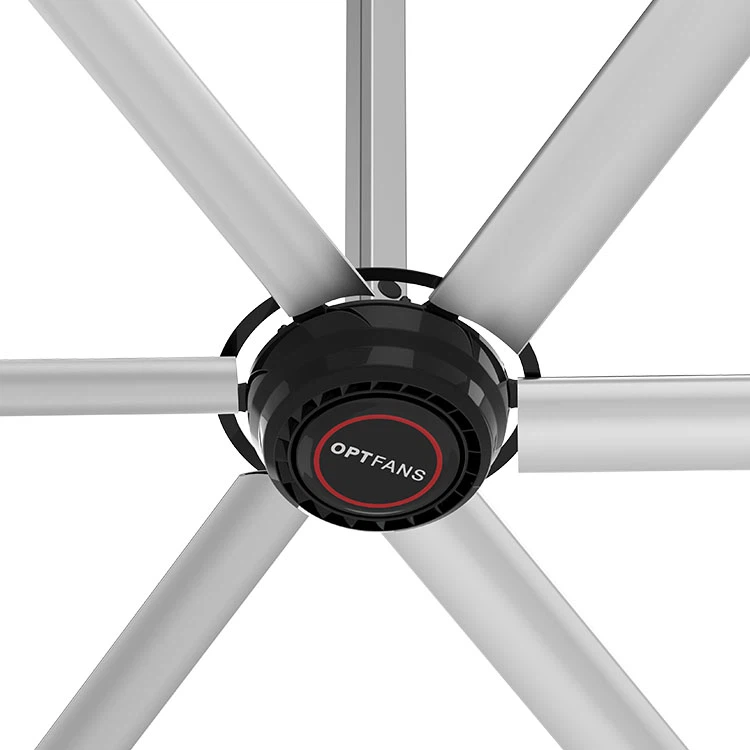
The Permanent Magnet Synchronous Motor (PMSM) is used in HVLS fans and is fully innovated with zero sound and maintenance. It is a direct-drive motor. Hence it reduces gearbox and maintenance costs in addition to power consumption. HVLS PMSM ceiling fans incorporate five blades.
-
![OPTFANS Giant Ceiling Fans Gym HVLS PMSM FANS For Warehouse]()
OPTFANS Giant Ceiling Fans Gym HVLS PMSM FANS For Warehouse
OPTFANS Giant Ceiling Fans Gym HVLS PMSM FANS for Warehouse
-
![OPTFANS HVLS Large Industrial DC Fan Big Fans]()
OPTFANS HVLS Large Industrial DC Fan Big Fans
Suzhou Optimal Machinery Co.,Ltd (OPTFAN)established in 2007, is the pioneer of
-
![HVLS Industrial Big Free Maintenance Ceiling Fan]()
HVLS Industrial Big Free Maintenance Ceiling Fan
Suzhou Optimal Machinery Co.,Ltd (OPTFAN)established in 2007, is the pioneer of
-
![OPTFANS Large Industrial Fans With PMSM Motor]()
-
![OPTFANS Big Size Air Industrial Warehouse Ceiling Fan]()
OPTFANS Big Size Air Industrial Warehouse Ceiling Fan
Main motor: PMSM Motor. Blade quantity: 5. Warranty: 2 years. Noise level: 4.5m:
-
![OPTFANSHigh Volume Low Speed Big Industrial Fans for High Ceiling]()
OPTFANSHigh Volume Low Speed Big Industrial Fans for High Ceiling
Texture of material: Magnesium aluminum alloy. Degree of protection: IP65.
-
![HVLS Large Industrial PMSM Ceiling Fans for Warehouse]()
HVLS Large Industrial PMSM Ceiling Fans for Warehouse
Main motor: PMSM Motor. Blade quantity: 5. Warranty: 2 years. Noise level: 4.5m:
-
![OPTFANS Large HVLS Industrial DC High Ceiling Fans for Garage]()
OPTFANS Large HVLS Industrial DC High Ceiling Fans for Garage
Texture of material: Magnesium aluminum alloy. Degree of protection: IP65.
-
![OPTFANS HVLS Industrial Roof Fan for Warehouse]()
OPTFANS HVLS Industrial Roof Fan for Warehouse
Main motor: PMSM Motor. Blade quantity: 5. Warranty: 2 years. Noise level: 4.5m:
-
![HVLS Gym PMSM HVLS Ceiling Fans]()
HVLS Gym PMSM HVLS Ceiling Fans
Texture of material: Magnesium aluminum alloy. Degree of protection: IP65.
-
![Huge HVLS Industrial Ventilation HVLS Fan High Ceiling]()
Huge HVLS Industrial Ventilation HVLS Fan High Ceiling
Main motor: PMSM Motor. Blade quantity: 6. Warranty: 2 years. Noise level: 4.5m:
-
![OPTFANS HVLS Large Industrial DC Fan for Large Space]()
OPTFANS HVLS Large Industrial DC Fan for Large Space
Texture of material: Magnesium aluminum alloy. Degree of protection: IP65.


Benefits of HVLS PMSM Ceiling Fans
Distribute air throughout your home Want to keep the warm or cool air flowing throughout your home? HVLS PMSM ceiling fans help evenly distribute air flowing from your AC unit. During the summer, run your fans counter-clockwise and then switch to clockwise for the winter.
Enjoy a steady breeze Improve the temperature of your home with a ceiling fan. Running a HVLS PMSM ceiling fans on a regular basis will keep your home comfortable and airy.
Lower utility bills Tired of cranking that AC up all summer long? HVLS PMSM ceiling fans are more efficient than HVAC units. Running your fan can reduce your home's temperature by as much as 8 degrees. That adds up to big savings on your monthly utility bill!
Better lighting HVLS PMSM ceiling fans bring in extra lighting to your home. This is especially useful in spaces that are on the darker side. You can look for ceiling fans with multiple bulbs to brighten up your space.
Technology Today's HVLS PMSM ceiling fans are not the same as those from decades past. Many come equipped with a remote control so you can operate it from afar. You'll also find sleeker blades, LED chips, and timers.
Quieter operation (especially compared to air conditioners) HVLS PMSM ceiling fans are no longer the noisy appliances of years past. While you may have been able to hear the ceiling fan going in the next room decades ago, today they're much quieter. Today's fans are so quiet you won't even know they're running until you feel the cool breeze.
Contemporary styling No need to settle for clunky, oversized fans. You'll find plenty of options on the market today, including brushed nickel, walnut, and soft white. (Just to name a few!)
Better for the environment With a HVLS PMSM ceiling fans, you can reduce your reliance on your HVAC system. Research indicates they can reduce energy usage by 40% in the summer and 10% in the winter. That's a definite win for the environment!
Small footprint in your home One of the nice things about HVLS PMSM ceiling fans is they don't take up living space like a tower fan or space heater. Chances are you aren't as worried about using ceiling space.
Perfect for indoor and outdoor spaces Cool breezes shouldn't be limited to just the indoors. HVLS PMSM ceiling fans are one of the most effective ways to cool your outdoor living spaces. They're great for shooing the bugs away too!
Why Choose us
Experienced team
Our team comprises professional and experienced individuals who possess the necessary skills to handle and deliver your project with a top-rated result.
We always deliver on time
We genuinely understand the value of time in business and hence adhere to time and deliver all projects on time to our customers.
Customer satisfaction
We place customer satisfaction at the core of our operations. We aim to deliver services that exceed our customer's expectations and earn their trust.
Professionalism
Our company is committed to providing top-notch services to our clients. We have a team of highly skilled professionals who are trained to deliver quality services.
Experience
Our company has years of experience in the industry, which has enabled us to build a solid reputation for ourselves. We have worked with various clients and delivered successful outcomes.
Quality
Our top priority is to provide high-quality work that meets and surpasses your expectations.
Buying Considerations for HVLS PMSM Ceiling Fans


Room size
The size of your room will affect the size of the HVLS PMSM ceiling fans you choose. A larger room has much more air to move than a smaller room and therefore will need a bigger fan. As a rule of thumb, small rooms (75 to 175 square feet) will need a fan with a 42 to 48-inch blade size. Medium rooms (175 to 300 square feet) should have a fan with 52 to 56-inch blades. For a large room (more than 350 square feet), you should pick a fan with a blade size that is 60 inches or more. And for very small spaces, there are fans available with a 29-inch diameter or less. Making sure you choose the right size fan for your room is important for ensuring it works efficiently.
Ceiling height
Typically, a HVLS PMSM ceiling fans works best when it is 8 to 9 feet from the ground. To ensure that your fan is positioned at the right level, you will need to consider how the fan mounts to the ceiling. For low ceilings, flush-mount fans are available. These hug close to the ceiling, keeping the fan from hanging too low. Standard-mount ceiling fans are ideal for medium-height ceilings. These have a downrod that slightly lowers the fan from the ceiling. For very tall or vaulted ceilings, long downrods and adapter kits are available.
Lights vs. no lights
HVLS PMSM ceiling fans are available both with lights and without lights. Therefore, it is important to keep in mind your lighting situation when choosing a ceiling fan. If your space is brightly lit by large windows and other lighting fixtures, you may wish to choose a ceiling fan without a light. On the other hand, if your space is a bit dark or could use more light, a ceiling fan with a built-in light could enhance your space even more.
Control options
There are many options to choose from when deciding how you would like to control your HVLS PMSM ceiling fans. Pull chains hang from the fan, making this a great option for low ceilings. Wall-controlled fans put all your control options on the wall light switch. These are great for keeping everything in one place, and for taller ceilings where pull chains are not an option. Remote controls can be used to control your ceiling fan wherever you are, without having to go to a particular wall switch. For even more convenience, some ceiling fans have smart home control features and can be controlled from any smart device.
Style
Along with technical features, there is also style to consider. HVLS PMSM ceiling fans not only change the physical feel of a room by helping to regulate temperature, but they also change the visual appearance. When deciding on a ceiling fan style, take into consideration the style of your home. A wide variety of styles are available, from farmhouse to industrial to modern.
Types of HVLS PMSM Ceiling Fans
Indoor or dry-rated ceiling fans As indicated by the name, these fans are designed for indoor use only. These are perfect for bedrooms, living rooms, great rooms, or other areas in the home where excessive moisture is not present.
Damp-rated ceiling fans Damp-rated ceiling fans are designed to withstand damp conditions both indoors and outdoors. Indoor rooms that experience high amounts of moisture, such as bathrooms, are great for damp-rated ceiling fans. Outdoors, these fans are ideal for covered areas that will not receive direct water exposure, such as covered porches or patios.
Wet-rated ceiling fans These types of ceiling fans are designed to withstand direct contact with water, such as rain and snow. These are ideal for open outdoor areas, such as pergolas. They are constructed with materials that withstand moisture and changing weather without rusting or malfunctioning.
HVLS PMSM Ceiling Fans Blade Material
Plastic blades are a material with many advantages. For example, plastic blades are very easy to clean. They even sell plastic blades that you can wash in the dishwasher. Because plastic can be molded and dyed, there are various blade options made out of plastic. Plastic is also light-weight which means the fan will weigh less overall. Plastic blades will not deteriorate as easily with the climate compared to other materials. This is because plastic is not greatly affected by moisture and humidity. In addition, it is unlikely that plastic blades will be affected by heat in the kitchen.
Ceiling blades made out of timber are very durable. Timber blades also generate less noise. There are plenty of styles made with different kinds of wood as well as different finishes. Usually the wood is processed with plastic to prevent deterioration and to improve airflow. However, if the blades are not infused with plastic, they will likely accrue damage from moisture.
Blades made out of metal are also long-lasting. They perform exceptionally well due to minimal air resistance. However, this material is heavier which means it will require a stronger motor. This can cause them to be noisier compared to other blade materials. It is not recommended to use metal blades outside because they can rust.
Using cloth blades is a popular option because of the aesthetic. However, they can be hard to clean because the material attracts dust.
HVLS PMSM Ceiling Fan Blade Quantity
3-Blades
Three blade HVLS PMSM ceiling fans are ideal because fewer parts require less energy to rotate. This saves homeowners money on their energy bill. Many people love the aesthetic of a three blade fan because of the modern appeal. Another benefit is that they do not consume that much space in a room. However one disadvantage is that three blade fans are often noisier than fans with more blades.
4-Blades
Many people appreciate four blade HVLS PMSM ceiling fans because of the symmetry in the number of blades. They are less noisy than three blade fans. They usually come in many different designs. However, they are pricier than most three blade fans. In addition, they are usually slower than three blade fans because of the extra weight.
5-Blades
Five blade HVLS PMSM ceiling fans generate regular airflow because of the proximity of each blade. Also, five blade fans are usually the quietest of the three mentioned. These kinds of fans are not as common, so they will be pricer. Because of the extra blades, the motor will need more energy to operate.
How to Clean and Maintain HVLS PMSM Ceiling Fans & Exhaust Fans
Remove the exhaust cover
Standing on a sturdy ladder or stepstool, remove the exhaust fan cover. This is usually held in place with metal tension clips that need to be squeezed for removal—no tools required! On some models, the cover may be held in place with screws. The cover itself can be thoroughly cleaned with dish soap and warm water.
Vacuum out dust
With the fan blades and motor exposed, use a vacuum wand attachment to remove as much dust as possible. This cleaning wand can generally be found as an extension on your vacuum cleaner.
Wipe the blades with a dusting cloth
Use a dry dusting cloth to carefully remove any remaining dust from the blades and other internal components. For more stubborn dirt, try using a damp cloth to clean. After that, simply replace the cover, and your fan is clean and ready. Exhaust fan maintenance should be a snap and will help save you time and money in the long run!
Vacuum and dust the fan
Use a vacuum wand attachment or feather duster to remove all dust from the blades and exposed parts of the fan. A large amount of dust can accumulate on ceiling HVLS PMSM ceiling fans. You may want to wear a face mask while cleaning to help avoid breathing in dust. Be sure to stand on something stable if you can't reach from the floor. Another popular home hack is to clean the blades with an old pillowcase. Simply wrap a fan blade with a pillowcase and apply pressure to the blade to wipe off dust into the case. Repeat these steps for each blade. Once you're done, pound the dust out from the pillowcase before washing it for another use.You may also use a damp cloth to wipe each blade. Be sure to rinse the cloth after every blade to get rid of excess dust.
Tighten screws
If you hear rattling while your HVLS PMSM ceiling fans is turned on, there's a chance a screw or other part of the fan system is loose. Check all components and tighten anything that may have come loose with a screwdriver. Additionally, check for any missing screws and replace to ensure your ceiling fan is secure.
Clean the fan motor
An essential part of your HVLS PMSM ceiling fans maintenance is to periodically check the motor. The ceiling fan motor's cover should keep most dust out, but some may still get in. To clean the motor, simply apply a vacuum to the slits on the top of the motor cover. This should help remove the excess dust from your fan's motor.
Lubricate ceiling fan bearings
The final step in fan maintenance is lubrication. Many HVLS PMSM ceiling fans, especially newer models, are designed to be maintenance-free and never require oiling. Others may have a small reservoir on top of the motor where you should add a few drops of machine oil from time to time.
Feature of HVLS PMSM Ceiling Fans
Wide coverage with power saving, fan diameter up to 7.3m, the maximum coverage area of each fan is more than 1,000 square meters with a maximum power of 1.5KW;
● Tridimensional wind, 360-degree air circulation, ventilation without blind spots, ventilation, and cooling as well as dehumidification;
● The airfoil blades developed by scientific design and advanced aerodynamic technology and principles enable greater air volume and higher efficiency, such as the shape, Full, and Separate ConnectReinforce Rib
● Easy installation, elegant appearance, HVLS PMSM ceiling fans can be installed in any BIG SPACE which is higher than 4.0 meters, not just a fan, but beautiful scenery.
● Innovative technology, low speed, less wear, maintenance-free, and long life.

Reduced audible noise
One of the most immediately noticeable advantages of HVLS PMSM ceiling fans speed control comes in the form of relief for your ears. Fans running at full speed can be a significant source of annoyance, especially for equipment used in quiet office environments. Most offices are usually at a temperature significantly less than electronic equipment is designed to operate up to, which means fan speed can be reduced without adverse effects, much to the relief of everyone within hearing distance.
Reduced power consumption
Applications such as laptops will benefit from reduced power consumption. Power consumption can be approximated as a square of the fan's speed. In the case of the HVLS PMSM ceiling fans, reducing the fan speed to 69% of its nominal at 12V cuts power consumption in half.
Cooling: HVLS PMSM ceiling fans are commonly used to cool a room by creating a breeze that helps to lower the perceived temperature.
Circulation: They help to circulate air, which can improve the overall air quality in a room by reducing stagnant air and preventing the buildup of odors.
Energy efficiency: HVLS PMSM ceiling fans can be used in conjunction with air conditioning to help distribute cool air more evenly, allowing for higher thermostat settings and potentially reducing energy costs.
Decor: HVLS PMSM ceiling fans come in a wide variety of styles and can be used as a decorative element in a room, in addition to their functional purpose.
Lighting: Many HVLS PMSM ceiling fans also incorporate lighting fixtures, providing both illumination and air circulation in a single unit.
The Optimal Location For HVLS PMSM ceiling fans Installation
Location for HVLS PMSM ceiling fans installation
When it comes to enhancing indoor comfort and energy efficiency, few appliances can rival the benefits of a well-placed ceiling fan. While it may seem straightforward, the location for installing a HVLS PMSM ceiling fans can significantly impact its effectiveness.
Room size and layout
To determine the ideal location for a HVLS PMSM ceiling fans, one must consider the size and layout of the room. For rooms smaller than 144 square feet, a single ceiling fan mounted in the center of the room can provide adequate airflow. However, larger rooms may require multiple fans strategically placed to ensure uniform air circulation. If the room has an irregular shape or features, such as alcoves or seating areas, it is advisable to position the fan in the area where people spend the most time to maximize its cooling effects.
Ceiling height
Ceiling height is another crucial consideration for HVLS PMSM ceiling fans placement. To maintain optimal airflow, it is recommended to install the fan blades at least eight to nine feet above the floor. This height allows for a safe distance between the fan and individuals, preventing any potential accidents.
In rooms with exceptionally high ceilings, down-rods can be used to lower the fan closer to the occupants’level, improving the fan’s effectiveness. Conversely, in rooms with lower ceilings, flush-mounted fans are ideal to avoid any clearance issues while ensuring proper air circulation.
Airflow optimization
Achieving the best airflow distribution is a primary goal when installing a HVLS PMSM ceiling fans. In most cases, the fan should be positioned in the center of the room to ensure balanced air movement. This location allows the fan blades to circulate air throughout the entire space, avoiding concentrated drafts or stagnant areas.
However, if the room has obstructions, such as beams or chandeliers, it is important to position the fan accordingly to optimize airflow around these obstacles. Additionally, it is recommended to install the fan at least 24 inches away from any walls or ceilings to prevent air turbulence and maximize the fan's efficiency.
Our Factory
At present, OPTFAN is one of the few professional manufacturers in the HVLS industry fans field with R & D team,manufacturing, program consultation, installation , sales and after sale service as one. It has the most experienced team to provide one-stop service.
OPTFAN's commitment to quality, craftsmanship and innovation to introduce unique new products is why they remain unrivaled today and why OPTFAN last for generations.They have never stopped pushing the boundaries of what's possible when it comes to engineering and product development.


Company Honor
CE、TUV、ISO、ERP、CQC

Asked Questions
As one of the leading hvls pmsm ceiling fans manufacturers and suppliers in China, we warmly welcome you to buy or wholesale hvls pmsm ceiling fans made in China here from our factory. All customized products are with high quality and competitive price.
HVLS Industrial Ventilation HVLS Fan, HVLS Industrial Big Free Maintenance Ceiling Fan, HVLS PMSM Gearless Industrial Fans